
The From Line
Sending, Managing & Monetizing Email

What’s the best way to get heavy foot traffic to your new cafe in New York City?
a) Rent a property right next to major tourist attractions and build your cafe there
b) Buy a property out of the way of tourist attractions and build your cafe there
(Yes, obviously buying a property next to major tourist attractions would be the best move, but you don’t have that kind of money.)
Here we face the dilemma of the “long short road” and the “short long road.”
14041 Hits
 Permission marketing is all about getting your hands on a targeted marketing list that will give your content a competitive edge. You're striving to reach the email inboxes of people who could soon become some of your most valuable customers, if they're not already. However, a problem that continues to plague many businesses is how to move beyond permission marketing in a way that will reach out to those who might not ever get the chance to hear about your business otherwise.
Social media has answered that call for many businesses. The answer lies in being able to produce excellent content for your blog or your website that your visitors will deem as shareable. Here are a few ideas to get you thinking about whether or not you have created a website that prompts your visitors to share your content with their network of friends and family members.
Social Sharing Buttons
Of course, if you have worked with a professional website developer, you probably have social sharing buttons on your website now. However, many business owners are taking advantage of the multiple free website options that are available to them, which don't always include social sharing features. Being able to share your blog posts on Facebook and Twitter gets your content out into the world. You never know who you might reach, and social media has helped take many businesses far ahead of their competitors.
Create Visual Content
One look at the expansion and popularity growth of sites like Pinterest will tell you that social media is taking a swift curve toward visual content choices. The saying, "A picture is worth a thousand words" holds a lot of weight in social media these days, and if your business produces a product or a service that is deemed to be valuable to the public, you'll do well to include graphics and pictures in your content.
Consider Using SlideShares
The SlideShares website has increased in popularity tremendously over the past few months. SlideShares will help you take advantage of your customers' partiality to visual content by generating a slideshow presentation out of a blog post. These can then be used to grow your business even more.
10365 Hits
 Any savvy businessperson knows that email has become an essential method of delivering marketing messages. Permission marketing, however, is a specific type of marketing aimed at communicating with customers who have already indicated an interest in your product by opting in via your website, Facebook page, or another vehicle.
Even though you may have “permission” to send marketing messages, there are some specific steps you should take to make your marketing strategy as productive as possible.
Pinpoint “WIIFM”
One of the first things that your customers will want to know is ‘what’s in it for me?’
Nearly 15 years ago, internet marketing pioneer Seth Godin said in Fast Company , "Consumers will grant a company permission to communicate only if they know what's in it for them.” So essentially it all comes down to rewarding consumers for paying attention to your message. Whether you offer industry tips, links to helpful information, discounts on products or services, or something else, consumers are all about getting something for letting you develop a relationship with them.
Build Your Target List
Building relationships with customers requires you to both hone in on who will bring you the most profit, as well as define those who are most likely to influence other customers. You want and NEED these people on your permission marketing target list.
7105 Hits
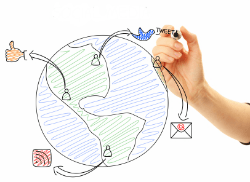 A recent study by Chadwick Martin Bailey that assessed “why consumers engage via email and Facebook” found that though social media has a strong following and excellent ability to increase brand recognition and loyalty, email is the preferred channel. Over 50% of email users polled said that they regularly engage with a brand via email for the purpose of receiving discounts and special offers, whereas 41% of social media users cited the same interaction.
Takeaway: Social media is a great booster, but email still remains king.
The primary difference between these two channels lies in the public aspect of the social media experience. While email subscribers remain virtually anonymous, users who “like” a Facebook page do so with full knowledge that their “friends” and “followers” will see their action. This sort of publicity is unparalleled. Even though it may have been solicited by a special offer or deal, personal recommendation of a brand shows support that email interaction cannot. However, email is and will remain to be the backing force behind any well rounded digital marketing campaign. It continues to be one of the most cost effective methods and according to Marketing Sherpa, B2C email marketers are reporting an average ROI of 256%.
14948 Hits
 Back in September, Facebook unveiled their newest update, “Timeline”, poised to eventually replace users “Walls”. At that time, the update was only available to developers; but according to a Facebook spokesperson, the roll out should be completed to all users within the next few weeks. If you have yet to make the switch on your personal profile, it’s about that time. You must be rolling your eyes and sighing at the thought of yet another Facebook update. However, this one’s worth it. It’s going to be a game changer. Marketers need all the time they can get to acclimate themselves with the new interface before Timeline is launched for brand pages.
Takeaway: Tell the story of your business.
Facebook Timeline for businesses is unknown territory, but the question is not IF it will happen, but WHEN. According to a recent Mashable article, it’s a known fact that “consistency in both functionality and appearance is really important to Facebook” but logically, they need to have their base of personal users switched over before delving into business profiles. So for the time being, marketers need to do as much research and planning as possible. I have come up with a few notable predictions for when the Timeline rolls out to brand pages…
The “cover photo” will be the golden egg. It will allow marketers free reign to customize a billboard-like space above their page, essentially affording them prime real estate for free. The possibilities are endless. Additionally, it has been suggested that the new Timeline will create an increased emotional experience between brand and customer. It will no longer be a blasting of “check out this sale!” or “Like our page!” Customers and brands will now interact in a way that is more peer to peer. Sharing “life events” with each other via the Timeline will help solidify this. Finally, the switch from a “wall” view to a Timeline now allows page owners to change dates/times/places of past events, as well as add in new “life events”. I see this leading brands to post such “life events” within their timeline and challenging customers to engage in a scavenger hunt of sorts. A post embedded within the Timeline that includes a deal or special offer will not only drive traffic to the page but will increase engagement beyond the typical news feed skimming. I predict the Timeline change will alter the way customers interact with businesses. According to a Facebook representative, so far “very few people ever return to a Facebook brand’s page after liking it. People are 40-120x more likely to see your posts in their news feed.” The Timeline is like a brand’s own personal news feed. Marketers will need to make the most of this change and reward returning customers.
10278 Hits